Names Are Hard

The ADA’s 2016 Standards of Medical Care in Diabetes recently shifted its language to match the ADA’s position that diabetes does not define people, “the word ‘diabetic’ will no longer be used when referring to individuals with diabetes in the ‘Standards of Medical Care in Diabetes.’ The ADA will continue to use the term ‘diabetic’ as an adjective for complications related to diabetes (e.g., diabetic retinopathy) (54.)'” This means that “diabetes” is now used to refer to the person who has it, instead of “diabetic;” for example, “My sister has diabetes,” not, “my sister is a diabetic.”

The name shift seems simple, but it’s packed with emotions, implications, and for some, even anger. I wrote a piece, Diabetic v. Diabetes, shortly after the ADA published the 2016 Standards of Medical Care in Diabetes, which explained the name change. When I linked to the article on Semisweet’s Facebook page, within seconds, the first comment was, “This is stupid.” Beyond Type 1 featured the article, and it garnered some healthy debate on the Beyond Type 1 Facebook page as well.

Some people see diabetic v. diabetes as splitting hairs or unnecessary political correctness. When I encounter the people who prefer to be called “diabetic,” or at least voice a strong and angry opinion against those asking to be called, “person with diabetes,” I respect their right to be called “diabetic.” In general, it seems these people have lived with the disease for many years— years when the battle was greater because technology wasn’t as advanced and understanding was scarer. Usually, these people are adults; however, children are more sensitive to language, labels, and their implications. In fact, we’re all probably not too far removed from that hateful comment or name someone hurled at us on the playground.

I’m the parent of someone who has diabetes. I couldn’t protect my son from getting diabetes, but I can try to protect him from the implications of being called “a diabetic.” He’s not even in kindergarten yet, and already kids his age have told him he, “can’t eat a certain food because [he’s] diabetic.” He’s been told he can’t play a certain sport because he’s “diabetic.” A neighbor kid didn’t want him in her yard because he’s “diabetic.” He’s brought home treats, like half a muffin or cupcake, from school because he didn’t eat it when the other kids did. We don’t make certain foods off limits, but he’s heard kids his own age tell him what he can’t eat. I wonder what he’s thinking as he watches his classmates eat their treats. He can eat that cupcake or cookie because he has diabetes, but he’s inherited the stereotype that he can’t, because he’s “a diabetic.”

The governing associations like American Diabetes Association are changing their language, and I think this is because our perception and understanding of diabetes is changing. To be “a diabetic” was a certain death sentence 94 years ago. After insulin, to be “a diabetic” meant doctors predicted vastly shorter lifespans; fear and misunderstanding from teachers, relatives, and the larger medical community impacted people’s lives negatively. Women with T1D were told they could not and should not have children (case in point, Steel Magnolias).

In this era of better treatment, people with diabetes can live normal lifespans with fewer complications. As more and more people live longer and better with T1D, we’re starting to understand that living with a chronic disease or condition, like diabetes, has impacts on our emotional health, romantic relationships, and mental health. Having diabetes, means we can talk about this, and if we talk about being “diabetic” versus living with diabetes, there’s a simple paradigm shift at work: a limited life vs. a limitless life.

In images, the paradigm shift looks like this.

Below is the picture of a child who’s just been given a shot of insulin for the first time in 1922, and he’s starting to wake up from DKA. He was in a Canadian hospital with a ward for diabetic children. Just weeks before, his parents sat at his literal death bed.
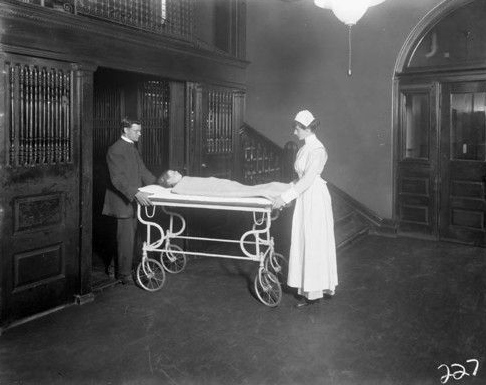
library and archives

photo source: Library and Archives Canada

He’s a picture of 4 time Olympian, Kris Freeman. He happens to have Type 1. In the photo, he’s training for another race and is wearing an insulin pump, Omnipod, on his arm.

In both pictures, we can see the life that insulin makes possible, and what’s harder to discern, but still visible, are the implications of being diabetic versus having diabetes.

Being diabetic once meant limitations, and yes, having diabetes requires my son to make sacrifices and take extra steps, but being a person with diabetes puts the focus on personhood. Thankfully, we’re living in an age when having diabetes means it’s a conversation about what we can do instead of what we can’t, and that’s ultimately the difference between diabetes and diabetic.

 

Diabetic v. Diabetes

My son was diagnosed with type 1 diabetes when he was three, so it took some time for us to master a new lexicon that had suddenly become part of our daily language: ketones, glucagon, hypoglycemia, and the list goes on. For the first few weeks after diagnosis we moped around the house, afraid to leave for fear of restaurants and grocery stores, puzzled at how to check a blood sugar in the car with a kid in a carseat. During this time, Henry had lots of questions about his “dia-bee-bees.”

Even in those early days after diagnosis, when someone referred to my son as “a diabetic” it irked me in a way I didn’t fully yet understand. When I broke the news of Henry’s diagnosis to friends and family, I closed the email with, “Henry is a healthy three-year-old boy, who also happens to have diabetes.” In those early murky days, when I was struggling to understand the difference between Lantus and Humalog, it was always clear to me that Henry was a person before he was “a diabetic.”

The 2016 Standards of Medical Care in Diabetes is out, and there’s a huge shift in the lexicon surrounding diabetes. The Summary Revisions section declares, “In alignment with the American Diabetes Association’s (ADA’s) position that diabetes does not define people, the word ‘diabetic’ will no longer be used when referring to individuals with diabetes in the ‘Standards of Medical Care in Diabetes.’ The ADA will continue to use the term ‘diabetic’ as an adjective for complications related to diabetes (e.g., diabetic retinopathy)  (54.)'”

“Diabetic” is an adjective for complications related to diabetes, not my kid. My kid is a person with diabetes. Sure, “person with diabetes” (PWD) is more awkward to say; there’s three additional syllables, and the language is obviously stretching to avoid labels, but the change in perspective can be life-enlightening.

At our house, we used to call the Fed-Ex delivery van “the pincher truck.”

IMG_8536

a pincher truck on delivery

This made total sense to Henry, who came up with the name. One day after he’d spent the night in the hospital, his parents, who’d never physically hurt him, had to hold him down 5-7 times a day and give him shots. Not only did they have to give him the shot, but they had to hold the needle in and count to three just to ensure better delivery of the insulin. Sometimes, they had to do this in his sleep. Then they started taping these pinchers (Dexcom) to his skin, and these pinchers came out of the pincher truck every month or so.

Henry’s almost two years into living with diabetes. He wears a pump and CGM (continuous glucose monitor), and he understands why. He’s also learned that sometimes toys come out of the pincher truck. He’s learning there’s never just one thing in this world. There are people, and some of those people have diabetes.

The first line of the 2016 Standards of Medical Care in Diabetes Introduction reads, “Diabetes is a complex, chronic illness requiring continuous medical care with multifactorial risk-reduction strategies beyond glycemic control. Ongoing patient self-management education and support are critical to preventing acute complications and reducing the risk of long-term complications.” That’s some heavy shit.

Here’s the subtext of that Introduction. Diabetes is a disease and a condition. Diabetes (types 1 and 2) is presenting complexities to a medical system that’s been modeled on fixing acute conditions, not managing a chronic disease across a person’s lifetime, which is why so much of the care, education, and financial burden for diabetes falls on the person and the person’s family.

My son needs strength and confidence to take the extra steps of self-care to manage his disease. At five-years-old, he’s already making sacrifices that are necessary to live a healthy life with diabetes. Those first seeds of strength and confidence come from others seeing him as a person first, not a condition.

Diabetes & Anniversaries

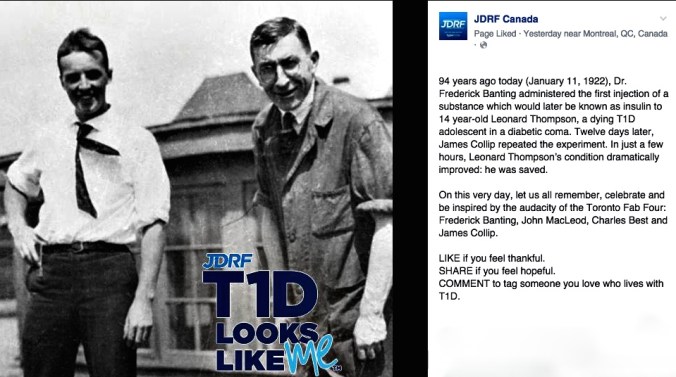
On January 11th, two seemingly unrelated images from the past crossed my Facebook newsfeed. The initial image, from JDRF Canada, celebrated the first injection of insulin given to a human 94 years ago on January 11, 1922. The patient was Leonard Thompson, a 14 year-old boy in a diabetic coma, what was then the end stage of type 1 diabetes. Within hours Thompson began to recover, and the discovery of insulin was immediately heralded as one of the greatest accomplishments of modern medicine. In fact, the The Nobel Prize in Physiology or Medicine was awarded to Banting and Macleod in 1923.

banting best

I’m fascinated with the medial history that surrounds T1D— both in the disease’s enigmatic nature as well as the scientists, doctors, and patients that seek to end T1D.

The second picture that crossed my newsfeed is from January 11, 2014. As a family, we were looking forward to seeing our first movie in the theatre and taking a walk downtown afterword. The songs and characters from Frozen swirled on the screen, and my daughter sat on the literal edge of her seat, holding my hand and inhaling with delight. Henry collapsed into his papa’s lap, and barely moved during the show. Since this was his first time in a theatre, I thought that maybe the light and sound were disorientating to him. I tried to make light of his grumpiness, so I took a picture of him.

movie fro

January 11th, watching Frozen;   diagnosed with T1D on March 6th

Now when I look at the picture, I see his flushed cheeks and puffy eyes, which happen when he’s had a persistent high blood sugar. The small Sprite in the cup-holder (probably the second or third soft drink he’d ever had), haunts me, and  I understand why he was lethargic during the movie and walk.

Around the time of the photo, the only symptoms he showed were irritability and lethargy. About three weeks later, my mother visited and commented on the heaviness of Henry’s morning diaper. I said, “I think he might have diabetes.”

When I said that, I didn’t really think Henry had diabetes, but I must have said it to voice an irrational fear, so the absurdity of the worry would become a talisman against its reality, like knocking on wood.

Parents of young children with type 1 diabetes often talk about the last picture of their child before diagnosis, noting the bittersweet moment. Usually, the photo shows some evidence of weight loss or lethargy, so parents beat themselves up for not knowing what was going on. On the other hand, there’s great liberty, because they didn’t know what they didn’t know— the ceaseless, worrisome nature of type 1 diabetes— a paradox  photo of a really sick kid in a last moment of joyful blindness.

When both these pictures crossed my newsfeed on January 11th, my first thought was thankfulness. How little time has actually passed between these two moments, but how many lives. Henry’s great grandfathers were born before the invention of insulin, and it’s only because of insulin that Henry’s alive.

In the early days after a T1D diagnosis, there’s shock and sadness, but there’s also an awareness of the great heritage of suffering and success that comes with T1D. I hope we’re at a moment in T1D history when the burden of care improves and the instance when some unlikely, scrappy doctors and scientists stumble onto the next breakthrough.


Q. How Can Doll Toys Make People Angry? A. Add Diabetes.

Right before the new year, my Instagram and Facebook blew up with images of young girls peering longingly into American Girl Store windows at this.

IMG_8446

a diabetes care kit from American Girl

Initially, this was a feel-good story. The American Girl company responded to a petition created by Anja Busse (11 when she started the campaign two years ago) for a “Diabetic American Girl.” There’s a Facebook page to support the idea and the petition garnered over 4,000 signatures. And at the start of 2016, American Girl responded by releasing its diabetes care kit. 

How could this story go wrong? A young girl became an advocate and a company responded with an ethical decision that could help potentially thousands of children feel a little bit better about living with a chronic disease. But then the ignorant trolls.

screenshot_2016-01-03-08-32-51This is another example of someone in the fitness community not understanding that type 1 and type 2 are different diseases. To Vinnie Tortorich’s credit, he’s now educating himself on the fact that type 1 is an autoimmune disease and is unrelated to lifestyle and diet, unlike the CEO of CrossFit.
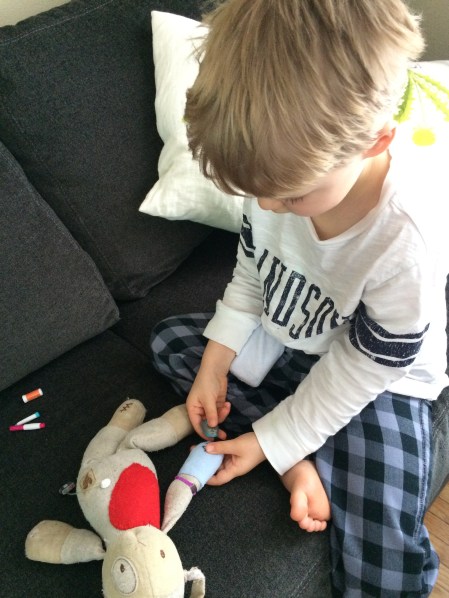
Kids who live with type 1 diabetes encounter many hardships, and aggressive ignorance by educated adults is harmful. Unfortunately, the only way to correct a lack of knowledge is to speak up during a diabetes dust-up.

The American Girl diabetes care kit is a victory. If a major corporation like Mattel (which American Girl is a subsidiary of), can get diabetes type 1 and 2 right, then so should CrossFit, the CDC, and anyone who shares a public opinion that expresses shame and blame over understanding.

IMG_8443


Diabetes & New Year’s Resolutions

I really enjoy the first week of the new year. The glut of the holidays is packed away, and while there’s reflection on the past, there’s more focus on the upcoming year. I work in academics, so the semester has yet to start, and our small town is usually covered in about a foot of snow. It’s quant, so this seems like the perfect time to reflect and plan. However, I’m not someone who makes New Year’s resolutions. In general, I believe that if there’s something I want to change or start, any random Thursday is just as good as New Year’s.

IMG_8402

a new year walk in the snow

Yet, type 1 diabetes has made me reconsider many assumptions and mores. The possible wisdom in establishing some resolutions at the start of the new year is just one of them. On her blog, Inspired by Isabella, T1D mom (and mother of triplets!) Kristina Dooley, wrote a post called “Losing Sight” that bravely discusses some of the biological stressors of being a T1D caretaker to a young child. Almost two years into the life of a d-mom and I can feel the effects of chronic sleep deprivation: foggy thinking, an increasing obsession with coffee, and higher stress levels.

Diabetes (both 1 and 2) is insidious for hundreds of reasons, but at the start of the new year, it seems that T1D is particularly cruel because there’s never a chance to regroup. Once that medical professional says “your child has type 1 diabetes” there’s no off-ramp. Instead, the person living with T1D, and to a smaller extent, his or her family, is running a marathon. For life.

We’ll look for the shady spots, like a three hour window with in-range steady blood sugars.

Maybe the start of 2016 is another good moment to rest. We don’t have much time before we’re back in the slog, so I think a few resolutions might help reframe our 2016 leg of T1D marathon: more protein, more sleep, and less worry about what’s beyond our control. On second thought, these are pretty lofty goals. I’ll settle for more sleep.

Diabetes, from Clinical to Personal

In this guest post, Rhonda Morgan, a registered nurse, describes how type 1 patients in diabetic ketoacidosis (DKA) and severe hypoglycemia were treated in the emergency department in the 1970s and 1980s. Rhonda’s understanding of type 1 diabetes changed in 2014, when the clinical became personal.

I began my career as a registered nurse in 1974, the summer I graduated college and passed my board exams. This was one of the sundry times there was a nursing shortage, so I started to work as a new graduate in a very busy emergency department (ED) of a 500+ bed hospital. It was grand. The ED affords ample opportunity to see just about everything. And we saw a lot of patients with diabetes in those days, primarily adults in DKA. Another frequently seen diabetic-related emergency was hypoglycemia (“insulin shock,” as it was known then), and these patients all too often presented to the ED, unconscious, with seizures, and with a very low blood glucose. Many doses of D50 (dextrose 50%) were administered empirically to known patients with T1D presenting with these symptoms. Likely no state of unconsciousness is as easily and instantly reversed. Occasionally, a child would present to the ED and be diagnosed with type 1, but children were always admitted to pediatrics, and never hung around in the ED for very long.

10357263_10203065033801835_7300812342255850425_n

Rhonda Morgan, RN in the ED, 1981, preparing an IV

The adult type 1 patient in DKA was one of my favorite patients to manage and care for in the ED, because the course was so dynamic, and one could see the favorable results of treatment over a short period of time. One of the really great ED physicians, with whom I worked for many years, would elect to keep these patients in the ED and treat them, as opposed to admitting them to the hospital, if they did not have insurance. This was much more financially feasible for the patient and family, plus the patient had constant care.

In those days, we had no bedside (point of care) blood glucose testing. We tested for glucose in the urine of our patients with diabetes using clinitest tablets. The clinitest method involved shaking a tablet out of the bottle into the test tube (because you could not touch the tablet with your fingers), adding 6 drops of urine and 10 drops of sterile water and waiting for the chemical reaction to occur. The contents of the test tube would fizz and generate heat, and then change color. After 30 seconds, one would compare the color of the liquid in the test tube to a color chart to determine the corresponding blood glucose. The test was very imprecise, but none the less we used this method of testing for glucose, along with blood tests that were sent to the lab, and took an hour or more to get the results.

clinitest

A few years later, test strips were available, but again, this method tested for glucose in urine and was not a direct or current measurement of blood glucose. DNA recombinant (Humalog/Novalog) insulins and basal insulins were not yet developed. We had regular insulin, NPH, Lente insulin, and ultra-Lente, the last two being longer-acting insulins. All were bovine origin.

Later in my career, I worked in critical care as a clinical specialist and helped institute computerized, and then later, web-based algorithms to manage hyperglycemia of critical illness, prevalent in both diabetic and non-diabetic patients in the ICU.

So, I have been around a lot of folks with diabetes. I have managed treatment and cared for of a lot of folks with diabetes in DKA, and in critical illness situations. However, I knew nothing about how to manage and oversee the maintenance of T1D until my grandson, Henry, was diagnosed with T1D at the age of 3.

Then, I saw the “other side” of diabetes— the personal side, not the clinical rescue, critical, immediate treatment regimen, but the everyday, every night, day-in, day-out routines that must be undertaken to keep him safe in the immediate, and to offer the best odds of avoiding the long term complications of diabetes. This side of diabetes management is just as critical as the side of diabetes care with which I was so familiar.

Our entire family had a learning curve that was fast paced. It was not easy, and it is not for the short term. It is for life. Henry was started on multiple daily injections at diagnosis in March 2014. Needless to say, this approach was filled with anxiety and unpleasantness for all. Thanks to his smart and advocating parents, he got his insulin pump and continuous glucose monitor in late May, just shy of 3 months into his life with diabetes. The pump ushered in a new learning curve, and the continuous glucose monitor gave us an eye on previously unseen data.

How I wish Henry did not have to live his life with diabetes, but he does.

I think back to 1974 and putting those 6 drops of urine in the test tube and feeling the warmth of the chemical reaction in my hand, and I contrast that to a direct blood glucose value we get multiple times daily in just seconds, CGM data transmitted over an iphone around the world, and insulin delivered with a pump, and I am confident Henry can have a happy, healthy productive life.

IMG_1066

Henry and his Nonna in 2014

2015 Type 1 Diabetes Index

November 14th is World Diabetes Day. November 14th marks the 618th day our family has been living with type 1 diabetes. To be sure, it’s difficult to measure or assess the emotional toll of living with diabetes, but there are ways we can measure the impact of living with type 1 diabetes. Here’s a look at Henry’s 2015 type 1 diabetes index. At the end of the blog, there’s a video where some of these numbers are juxtaposed to our everyday life, creating just a glimpse into the emotional side of living with type 1 diabetes.

Number of days Henry’s been living with type 1 diabetes: 618

Number of vials of insulin Henry’s used since diagnosis: 26

Estimated cost of 100 units of recombinant insulin without insurance coverage: $215

Range of a normal blood glucose: 80-120

Number of people living in the U.S. with type 1: 1,250,000

Estimated number of finger pokes Henry has had to check his blood glucose: 7,400

Number of insulin pump site changes Henry has had: 280

Estimated cost of an insulin pump without insurance: $7,000

Estimated yearly cost of pump supplies: $1,500

Chance of developing T1D if no relatives have the disease: .4%

Chance of developing T1D if a first degree relative has T1D: 10-20%

Average number of years T1D takes off of a male and female life (respectively): 11, 13

Number of site changes Henry’s had for his CGM (continuos glucose monitor): 83

Estimated yearly costs of a CGM without insurance: $2,800

Number diabetes related check-ups Henry’s had: 9

Number of miles on the road to Henry’s diabetes appointments: 1,786

Range of non-diabetic hemoglobin A1C: 4-5.6

Range of Henry’s hemoglobin A1C’s since diagnosis: 7.5, 8.1, 7.2, 7.3, 7.0, 7.5, 7.1

Chance someone will die of T1D within 25 years of diagnosis: 7%

Number of Henry’s hospitalizations and emergency room visits related to T1D: 5

Number of nights of uninterrupted sleep in Henry’s house since diagnosis: 0

Tom Hanks Sausage Links! a.k.a.: Co-Parenting Children with T1D

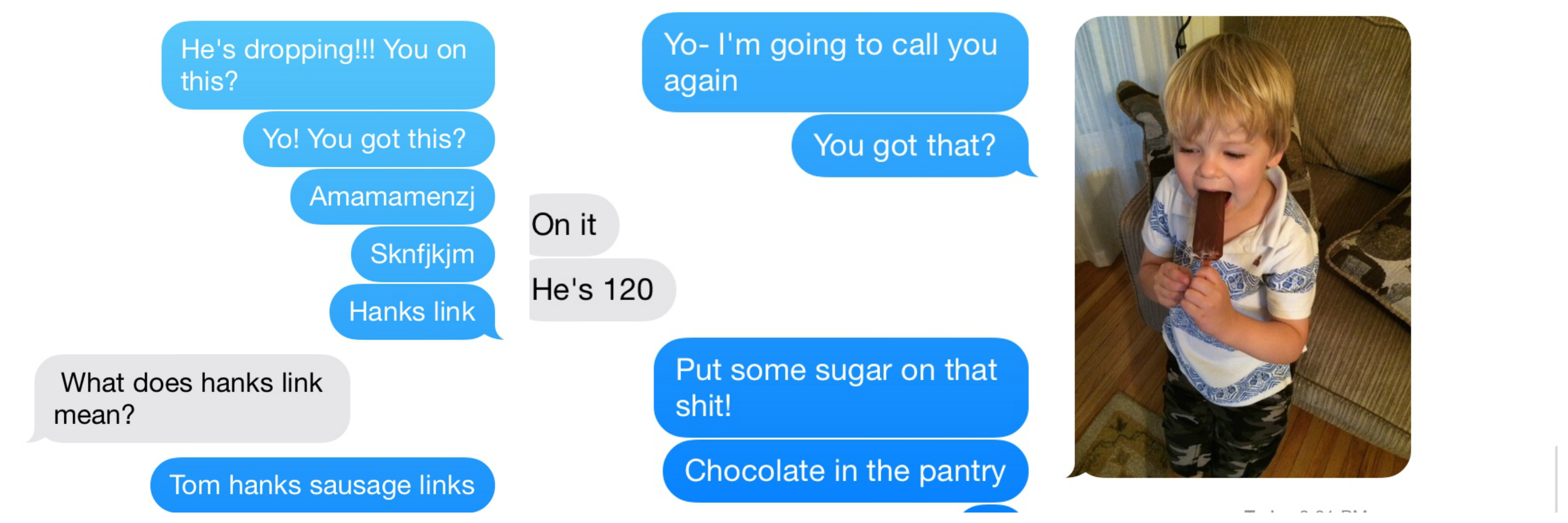
Presenting, in comic strip form, texts with my husband and fellow co-caregiver, wherein I just text letters to get his attention about a rapidly dropping low blood sugar, and autocorrect adds title inspiration: hanks link.

Tom Hanks

Parenting a young child with diabetes is a mixture of all-the-time-low-level-anxiety and anger/worry/warrior/defeated super vigilance, so it’s better to have two capable people on the front lines. My husband and I have a complementary approach to care; I’m the letter of the law and he’s the spirit of the law, and for our son to balance the burden of T1D across his lifetime, he’ll have to be both.

One random morning in March almost two years ago, my husband and I were learning to test each other’s glucose, but now we’ve tested Henry’s glucose over 6,000 times (20 months X 10 or more times a day). Every two days we change a site for his insulin pump and every seven days we insert a CGM (constant glucose monitor). About every 45 minutes, one of us looks at our phones to see where his blood glucose is, and every time we ever give him anything to eat or drink for.the.rest.of.his.life, we calculate the carbs and apply insulin or sugar.

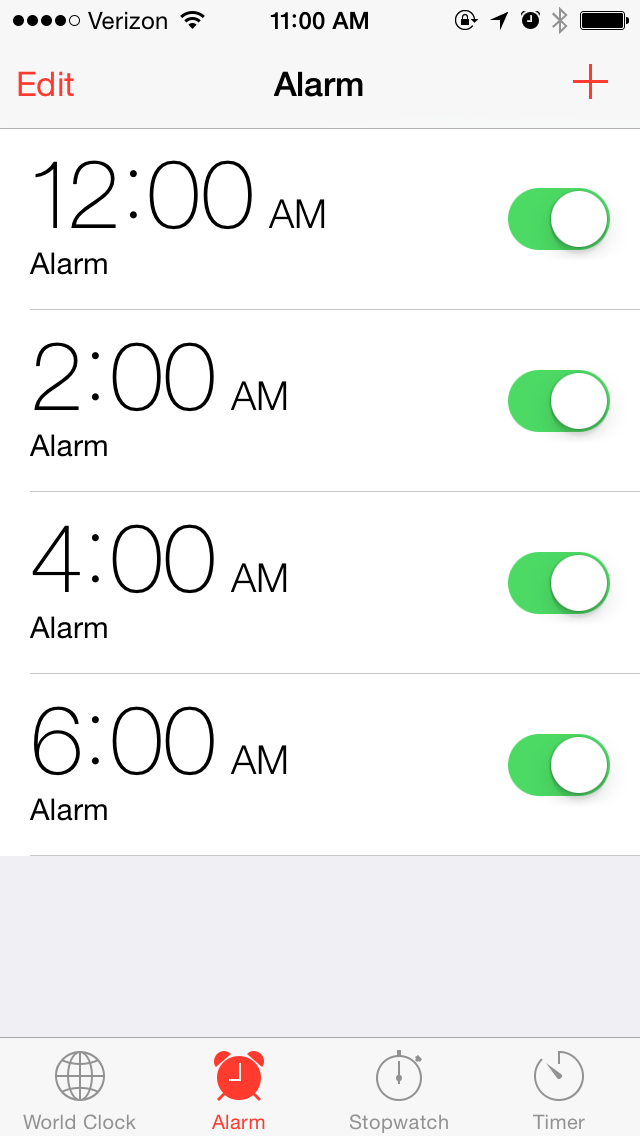
I’d do this for Henry for the rest of his life if I could, but I know that living a life of independence, freedom, and self-sufficiently means I’ll teach Henry to care for his diabetes little by little, and that crushes me, because right now my husband and I are working really hard to replicate a pancreas, and it takes sleep,

my nightly alarms

my nightly alarms

brain-space, sacrifice, hauling gear, literal hours from our day, money, and focus. Type 1 diabetes is a heavy burden to share, but it seems insurmountable to carry alone.

November is both Diabetes Awareness Month and National Family Caregivers Month. Before my son was diagnosed with diabetes, I thought caregiving was typically something the younger did for the old. In it’s more raw version, caregiving reverses its normal evolution and becomes something the older does for the younger, either for a lifetime or a portion of a lifetime. Now that we’re parents who are also caregivers, I see how many other parents share this joint occupation, so this November, Semisweet will be highlighting stories of parents who are caregivers.

To kick off the discussion, please check out this great video, “I Am the Pancreas,” by Rick Suvalle, dad of two T1D kids. He followed his son and daughter around for a few days with his iPhone to show what caring for T1D kids is like. To the parents of young T1D kids: we are the pancreas!

Cousins First, D-Cousins Second

I helped ease my sister back onto her hospital bed when the afterbirth pains had passed. I stood over her, but she was already asleep, a grimace  of pain and sadness etched her frown, even in sleep.

Less than 24 hours ago she’d had an emergency cesarean to deliver her 33 week old twins. Baby B was showing distress. The twins where delivered at 5:06pm and 5:08pm, and whisked to the NICU. Rebecca and her husband were called into the NICU at 2:00am to meet their babies, but before she could see her babies, still in the wheelchair, the doctor asked if they’d had prenatal chromosomal testing. Twins are automatically considered high risk, so they’d had every test. She was told her son had Down syndrome before she ever got to see or touch him.

She was told how the world would see her son before she ever saw her son. When any infant or child is diagnosed with a condition, syndrome,  or disease, the parents need to grieve for the life they’d expected for their child, then, without much flourish, put that life away and show up for the life that is. Rebecca showed up. Before Everett was discharged from the NICU, he had a team of therapists waiting for in-home visits.

When Rebecca and I talk about this moment she asks, “Why wasn’t I allowed to meet my son before someone told me what was wrong with him? Why did someone tell me what my son couldn’t do before I saw him? Why can’t people see what he can do?”

Two months later, the twins were healthy and home, but my husband and I were in the hospital with our son, Henry, who was just diagnosed with type 1 diabetes. A week later, we had our first follow up at our local doctor’s office, and the nurse not so much asked as  stated, “Your son, he’s the type 1 diabetic?”

“No,” I said, thinking of my sister. “He has type 1 diabetes.”

Just like his cousin, my son has a diagnosis that will define him, but much of their battle will be for a people to see them as people first. Rebecca knew this all along. Person first language.

D-Cousins

Cousins first, D-Cousins second

About a year after her son’s birth, my sister delivered this speech to a group focused on advocacy for Down syndrome (DS).

Two. This number began popping up in my life. Two blue lines on the home pregnancy test. Two embryos. Two fetal heart beats. Two tiny bodies growing inside of me. Two heads, two hearts, two souls, two babies to join our other two children at home. Everett and Vivienne were born two minutes apart. At two in the morning, only seven hours after they were born, we were asked what chromosomal prenatal testing we did.

I am a planner, so we did every check, test, and measurement throughout the entire high risk pregnancy. Apparently because they are twins, Vivienne “covered up” many of the markers all the specialist and doctors would have looked for with Everett. Before I got to even see or hold Everett, one of my two perfect babies, I was told what was “wrong” with him.

Days later we were shown his karyotype. A karyotype is a picture of a person’s chromosomes. Instead of two 21st chromosomes there were three. Everett has Down syndrome.

The next day was Christmas Eve, and I as discharged from the hospital, but I left my two premature babies in the NICU. They were born two months early, but the babies got stronger, and so did I. Daily I would visit them, but I was torn between the two isolettes.

Not having a prenatal diagnosis of DS forced me to hit the ground running. I had planned for my son to have one life, but now I was planning for him to have another. I looked for specialists, services, groups, funding, schooling, and opportunities for my son.

When Everett was two months old he started receiving services through our state’s early intervention services and as a two person team, we created plans, goals, and outcomes for Everett. When we came across an issue like feeding, sitting, or playing, we problem solved together. Two heads are always better than one.

During the peaceful moments right before bed I think of my two perfect babies and how they came into the world too early. I take their hands or caress their cheeks and I think of all of their cells and chromosomes in their bodies that make them who they are. I can imagine Vivienne’s Karyotype: the two 21st chromosomes next to one another. Then I think back to the time in the NICU when I was alone and scared, when the geneticist displayed Everett’s Karyotype to my husband and me. I remember those three 21st chromosomes lined up next to each other. Now I know that three is just as good as two. Maybe three will be my new lucky number.

Rebecca and Everette

Rebecca and Everette

Hello, We’ll Talk About Diabetes

In 1919, eleven-year-old Elizabeth Hughes, daughter of Charles Evans Hughes,
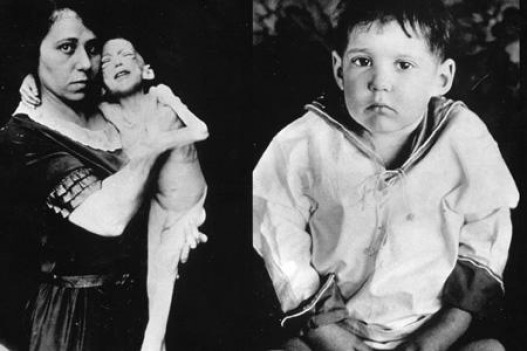
Justice of the Supreme Court, was diagnosed with type 1 diabetes, a death sentence. At the time of her diagnosis, children with T1D survived an average of 11 months after diagnosis. The only “treatment” was the Allen diet, a slow starvation—  eating about 400 calories a day from foods like “thrice boiled cabbage” (Total Dietary Regulation in the Treatment of Diabetes).

L: a child with diabetes on the starvation diet, R: same child after treatment with insulin (photo credit: trumanlibrary.org)

left: a child with diabetes on the starvation diet right: same child after treatment with insulin (photo credit: trumanlibrary.org)

Fortunately, Elizabeth was among the first American patients to receive insulin in 1922. She grew up, married, had three children, and died at age 73. When her children were young, she never told them she had diabetes, not even after her oldest son witnessed her convulsions from a severe episode of hypoglycemia. In fact, it wasn’t until her children were grown that she took each child aside and told them privately that she had diabetes.

Her secrecy made sense. She’d been handed a death sentence at eleven. Even after the discovery of insulin, prognosis wasn’t good. Recently, The New York Times ran an opinion piece, “The End Isn’t Near,” by Dan Fleshler, someone who has been living with diabetes for 53 years. Fleshler was diagnosed at seven, and his doctors weren’t optimistic about his longevity, but he’s healthy and here, yet the looming predictions cut into the quality of his life.

A diagnosis of a disease or a condition creates a stigma, and there’s a deep drive to keep any stigma a secret. However, secrets around disease create misunderstanding, shame, and fear. If people with diabetes and their family members don’t talk about what it’s really like to live with diabetes, then it’s easy for misconceptions such as: “insulin is a cure” or diabetes is “easy” as long as the patient doesn’t eat sugar, to circulate.

It wasn’t until my mid-twenties that I met who someone who was open about T1D. Amy regularly checked her blood sugar and bloused for food without any fanfare and answered all our questions, but I had no idea what it meant to have diabetes. In fact, we were hosting a party, and I made tea sweetened with honey just for Amy, because I knew honey was lower on the glycemic index. I’d thought to measure the honey and let her know how much I used, but I had no idea why it would have been better for Amy to drink something with an artificial sweetener in it, which she did.

A few years later, our son was diagnosed with type 1 diabetes, and I knew we would educate ourselves to help Henry live his life in the best ways we could. However, I thought we’d hunker down and live life with diabetes with relative quietness. And we did for a while, but we started noticing things, like when Henry hears the case of his blood glucose meter being unzipped, he holds out his finger without looking up from his Legos or iPad. We started reading information such as, Type 1 diabetes is increasing by 3% annually and affecting a younger and younger population, with some diagnoses occurring before a first birthday. There’s no disease registry, so T1D can’t be studied in a truly systematic way. Some insurance companies deny coverage for life saving and extending equipment, such as pumps and CGMs, for infants and children. Some schools don’t allow students with T1D to use smart devices, such as an iPod, iPhone, or iPad to help manage blood sugars.

It took me about a year to move from being a parent of a person with diabetes to an advocate for diabetes awareness and research. In fact, I think many parents of children with disabilities, diagnoses, and conditions, to their surprise, define themselves as  an advocate after the emergency settles into the daily.

So, for now, we’re speaking up, telling Henry’s story with the simple belief that story and science should work more closely together. This summer insulin turned 93 and Henry turned 5 in September. If we talk about diabetes enough, maybe one day we can talk about it less.

IMG_7239