A Season of Thankful Awareness

In a recent post on A Sweet Life, “Neonatal Monogenic Diabetes: Cameron Lundfelt’s Story,” Cameron’s mom describes the overwhelming standard of care given to young children with garden variety T1D, “I was always concerned about when did he last eatWhat are his sugar levels?  When is the next time he has to have a shot?  Did I give him too much insulin at the last meal? Did I not give him enough insulin? I lay awake at night wondering how I could have done better at keeping his sugars ‘within range.'” Through Cameron’s mom’s diligence, it was later discovered that Cameron has a rare form of diabetes caused by a genetic mutation that can be controlled with oral medication, but all parents of children with diabetes know the fears and worries she describes.

November is almost over, so Diabetes Awareness Month is coming to a close, but the end of the year holidays are starting. Diabetes Awareness Month juxtaposed to the holiday season means awareness morphs back into silent difficulties for so many families living with T1D.

Here we are, at the end of November, taking a deep breath and sharing the life we live in two hour increments during each day and night of all twelve months.

Super T1D in blue with blue d-bag. #bluefridays #projectbluenovember

A photo posted by @semisweett1d on

As we enter the holiday season, we’re glad for:

  1. insulin
  2. Fredrick Banting and Charles Best, discoverers of insulin
  3. Dexcom, a continuous glucose monitor
  4. batteries that power insulin pumps
  5. insulin pumps
  6. the Diabetes Online Community
  7. Children with Diabetes, Friends for Life Conference
  8. Henry’s dedicated and caring preschool teachers
  9. Ed Damiano, Denise Faustman, JDRF
  10. Henry’s sense of humor

And after all the chaos, illness, and destruction, the last thing to fly out of Pandora’s box:

The last thing to fly out of Pandora's box. #handsofhope #projectbluenovember

A photo posted by @semisweett1d on

Caretaking for Two

It’s Diabetes Awareness Month, as well as National Family Caregivers Month, so Semisweet is sharing its second guest blog, an interview with a parent caregiver, Angie Ashe, mother to Elliot and Fiona. Elliot has Arthrogryposis and Fiona has Amniotic Band Syndrome.
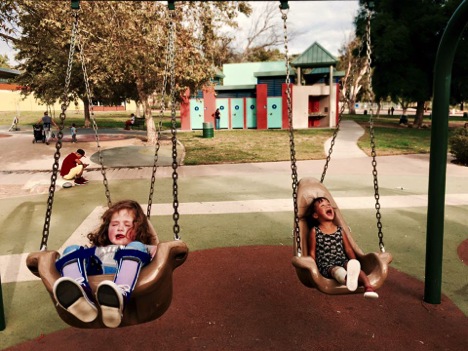
Elliot & Fiona

Elliot & Fiona

How would you describe your children’s conditions? 

When my first daughter Elliot was born, her physical disability was a delivery room surprise. When we adopted our younger daughter Fiona two years later, her physical disability was completely planned. Because of our experience with Elliot, my husband and I deliberately set out to find a daughter who could benefit from all the great specialists we met along the way. Elliot has Arthrogryposis, which means that her limbs did not develop properly in utero. She has very limited muscle and range of motion in her limbs. She also happens to be non-verbal. Fiona has Amniotic Band Syndrome, which resulted in an underdeveloped foot that had to be amputated and missing digits. She also happens to talk non-stop. Neither girls require any medication or special diets. Their needs are mostly physical.

What care for your children is required, and how do you and your partner divide this care?

As their caretaker, I do a lot of heavy lifting. I don’t mean that metaphorically. I lift a 45 pound 5-year-old (who often fights being carried if it means she’s going to bed or the bath), a 35 pound four-year-old, and a wheelchair in and out of my trunk all the time. It took some getting used to, but I have a pretty strong back and no need for a gym membership. Most parents get the privilege of fighting with their kids, telling them they’re too old to be carried. I get the privilege of helping my five-year-old walk around in her leg braces, a feat we were never sure she’d accomplish. I’ll take all the work involved in helping her up and down the structure at the playground just to hear her giggle when she goes down the slide.

slide

My husband Rob and I both work in our family. He works full-time as a Television Editor. I work as a Children’s Librarian, but I only work part-time for the kids. Because of my schedule, I am the parent who takes the girls to every doctor and hospital appointment. When your children are as complicated as my children, that equals a lot of appointments. There’s the lower orthopedic surgeon, the upper orthopedic surgeon, the cardiologist, the neurologist, the neurosurgeon, the urologist, the ophthalmologist, the developmental pediatrician, and the orthotist. Let’s not forget the offices we’ve visited just for fun, like the audiologist and the optometrist. Plus, the offices all kids have to go to, like the pediatrician and dentist. In between all this, there have been many visits to the hospital’s hand clinic for nighttime splints to be made and adjusted and the casting clinic for serial casting of the legs. Plus, there are the many, many hours spent in OT, PT, speech, social skills therapy, and behavioral therapy.

Having listed all these, don’t think for a second that I dread any of this. I actually like taking my girls to their appointments. I show up early with snacks and games for everyone. I’m that mom. If this is going to be their life, it’s my duty as their caregiver to make it fun. My kids know everyone wherever we go. The staff at all the offices are their buddies. My girls may be scared of the blood pressure cuff, but they are not scared of the nurse holding it. My job is to make sure that they know they are surrounded by friends at all these appointments. I like to think that I am surrounded by friends too. Since I have no time to just hang out with friends, I have made many of the people who work with my daughters my friends over the years.

Just because my husband misses most of their appointments does not at all mean that he is hands-off. My luxury in our family is that I do not have to deal with insurance and bills. I have never called our insurance, ever. I’m quite proud of that. It’s freeing to show up at all these appointments and never worry about how they are going to be dealt with through insurance. I’ve had times where an employee at the front desk has asked me an insurance question, and I just smile and declare that I haven’t a clue. I have to reserve so much of my brain power for all their medical info that I rather enjoy saving no space for insurance mumbo jumbo. I believe my husband likes having an important role in our medical journeys as well. I completely trust him to do all this, and he does a spectacular job. I pride myself on being an intelligent woman, but there is a beauty in being blissfully ignorant when it comes to all the back and forth between insurance. For the sake of honesty, I’ll admit that I’ve written a few letters of appeal, but it’s more fun to believe that I am free of all insurance worry.

road

Describe a caregiver technique you and your partner do differently.

One major way that my husband differs from me is that he is a homebody, and I don’t sit still well. I like to take the girls to the gym or park, if we are bored at home. He, on the other hand, never gets bored at home. I think both qualities are good to have in a family. While I can get anxious that Elliot is not getting enough exercise, I can see that bumming around the house is something that she needs sometimes. She works a lot in therapy and school, and he helps remind me that it is not going to hurt her to do nothing for a little while.

There is one area in Elliot’s life that I have never trusted my husband: her splints. Elliot got her first pair of wrist splints in the NICU. They are meant to hold her wrists in an ideal position when she slept. When she was smaller, the splints were actually putting a little pressure on her wrists, trying to help them move into a better spot. Now, they just maintain. She’s achieved a lot with splinting. If they are strapped on too tight, they can create pressure sores. If they are too loose, they will offer little benefit. For five years, I have tiptoed into Elliot’s room after she’s gone to sleep and quietly strapped each splint on. I acknowledge this is my own form of craziness, and, therefore, do not resent my husband for knowing nothing about her splints.

One big thing that I don’t think a lot of people realize about my life as my daughters’ caretaker is that it involves a lot of medical decision-making. You see, there is not one pattern to follow for any of this. There are tons of surgeries out there and tons of opinions on all of them. Every single choice I have made on my daughter’s behalf I have heard someone talk negatively about it in an online support group. The boots with the bar that helped my daughter’s club feet, those are awful, don’t work at all, should never be used on a child with my daughter’s condition. I thank goodness all the time that I have excellent research skills as a librarian and know better than to believe everything I read online. Out of the plethora of treatments, we have to pick some (or none, as some choose to do), and we have to do our best to be happy with our decisions. Luckily, my husband and I make a great team when it comes to these decisions. We’ve talked about these procedures endlessly, and we meet in the same place when it comes to our daughters’ care.

Elliot started kindergarten this fall, and I can happily say that I handed off some of my caretaker duties to her teacher and aides at school. She is part of an amazing special ed program in our city, and her transition to longer school days could not have happened at a better time. Five years of early interventions is a lot. Five years of working my butt off. Adding Fiona to the mix almost two years ago sped our household up even more. I was honestly exhausted. Right now, I am grateful that I can lay off Elliot a bit and let her just relax when she comes home from school. I still have a hard time leaving her be, but I’m getting better at it. I stretched her 6 times a day for years. I bribed her with Goldfish to take tiny steps through the aisles of Target for years. Now, I let her sit and play iPad. Nothing else. It’s nice. She’s learning to communicate with us through that iPad now too, so don’t knock the iPad time.

I’m going to be my daughters’ caretaker for life. Fiona will leave our nest one day, but Elliot likely never will. My vision of my future has changed over the years, but it’s not a bad thing. Elliot loves the ocean. She might be my key to getting that little retirement house at the beach that I always dreamed of. My job as her caretaker now is to make sure that she grows up to be someone I will love spending every day with. Elliot, Rob, and I will rock in our rocking chairs, watching the ocean, waiting for Fiona to visit and tell us of all her adventures. That doesn’t sound bad at all.
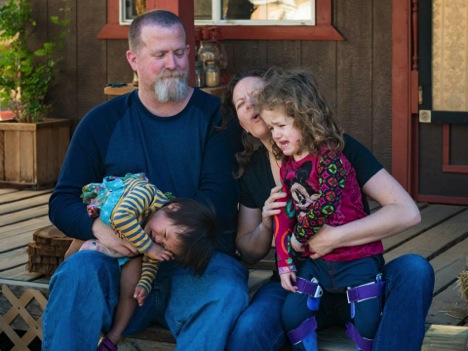
family

The Ashe Family

2015 Type 1 Diabetes Index

November 14th is World Diabetes Day. November 14th marks the 618th day our family has been living with type 1 diabetes. To be sure, it’s difficult to measure or assess the emotional toll of living with diabetes, but there are ways we can measure the impact of living with type 1 diabetes. Here’s a look at Henry’s 2015 type 1 diabetes index. At the end of the blog, there’s a video where some of these numbers are juxtaposed to our everyday life, creating just a glimpse into the emotional side of living with type 1 diabetes.

Number of days Henry’s been living with type 1 diabetes: 618

Number of vials of insulin Henry’s used since diagnosis: 26

Estimated cost of 100 units of recombinant insulin without insurance coverage: $215

Range of a normal blood glucose: 80-120

Number of people living in the U.S. with type 1: 1,250,000

Estimated number of finger pokes Henry has had to check his blood glucose: 7,400

Number of insulin pump site changes Henry has had: 280

Estimated cost of an insulin pump without insurance: $7,000

Estimated yearly cost of pump supplies: $1,500

Chance of developing T1D if no relatives have the disease: .4%

Chance of developing T1D if a first degree relative has T1D: 10-20%

Average number of years T1D takes off of a male and female life (respectively): 11, 13

Number of site changes Henry’s had for his CGM (continuos glucose monitor): 83

Estimated yearly costs of a CGM without insurance: $2,800

Number diabetes related check-ups Henry’s had: 9

Number of miles on the road to Henry’s diabetes appointments: 1,786

Range of non-diabetic hemoglobin A1C: 4-5.6

Range of Henry’s hemoglobin A1C’s since diagnosis: 7.5, 8.1, 7.2, 7.3, 7.0, 7.5, 7.1

Chance someone will die of T1D within 25 years of diagnosis: 7%

Number of Henry’s hospitalizations and emergency room visits related to T1D: 5

Number of nights of uninterrupted sleep in Henry’s house since diagnosis: 0

Parent Caregivers: Kevin & Rebecca

It’s Diabetes Awareness Month, as well as National Family Caregivers Month, so Semisweet is sharing its first guest blog, an interview with parent caregivers, Kevin and Rebecca who are parents to Everett. Everett was born at 33 weeks, and a few hours after his birth, Kevin and Rebecca learned Everett has Down syndrome. Infants and children with Down syndrome will experience delayed milestones, like rolling over, talking, standing up, and walking.

Here’s a Facebook status that Rebecca posted last week: I was multitasking during Everett’s PT visit, and while the physical therapist was here, I was attempting to cook dinner, but Everett was using his walker, and I got so excited. Kevin and the girls got home right in time to see the firetrucks pull up. Good to know that the fire alarm works. No fire, lots of smoke, but Everett stood up on his own. We ate leftovers to celebrate.

What’s a tame little kitchen fire when your child stands up for the first time?

Everett standing up for the first time in physical therapy.

Everett standing up with the help of his walker.

How would you describe your child’s condition? 

Rebecca: My child has Down syndrome. Down syndrome doesn’t have him. It is just part of him and doesn’t define him. It is part of his person. Because of the additional 3rd copy of the 21st chromosome there are certain (daily) things that we need to be mindful of as far as health, learning, or daily living. Everett is smiling, has red hair, has DS, and loves to play with cars.

What care for your child is required, and how do you and your partner divide this care?

Rebecca: Because I was off work for almost two years the scheduling primarily falls on my shoulders. When I returned to work, I kept that responsibility since my husband works a second job to supplement our income. I make his weekly therapy appointments (averaging around 4 appointments a week). Friday is therapy free, so Friday is fun day. About once a month I try to accomplish a bigger long term goal involving support groups, advocacy, funding issues, or later life care.

What impact has being a caregiver had on your relationship? 

Kevin: It has not made it harder. It is the mindset we have chosen. It is just giving extra opportunities to Everett. In no way has it weakened our marriage.

How has being a caregiver changed your relationship?  

Rebecca: It reinforces the fact that we are a team.

Describe a caregiver technique you and your partner do differently.  

Rebecca: Kevin will carve out time and work on a skill that a therapist is asking us to do. It is direct instruction. I will normally have the kids around me and we all do it together and I just try to integrate it into our play.

In twenty words or less, describe your partner’s caregiving superpower.

Rebecca: Kevin’s superpower is his love for his children, from our first baby to our fourth baby.

Kevin: Rebecca’s superpower is the ability to keep everything going.

Diabetes Awareness Month Begins!

About two years ago, I was celebrating a lack-luster birthday. My son had been lethargic for a couple of weeks. He was peeing through diapers, drinking a lot, and he was very cranky. After bedtime, a friend stopped by our house for a birthday toast. What should have been a pleasant conversation devolved into me telling her how I’d scheduled an appointment for my son the next morning because I thought he had diabetes. Earlier in the day, my mother-in-law called to wish me happy birthday, and I quickly switched the topic to Henry’s strange symptoms and my suspicions of type1 diabetes. I look back at these moments and am thankful I acted so quickly; however, now I realize how little we knew about living with type 1 diabetes. Twelve hours after my friend left, my husband and I were in the car with our three-year-old son on the way to the major children’s hospital in our state.

Now, I’m really aware about diabetes, but here’s the paradox about awareness: you can see outlines of what you don’t know. I don’t know how Henry is going to handle T1D in school. I don’t know how his teachers will handle managing diabetes in a classroom as we change grades from year to year. I know Henry can and will rebel against T1D in his teen years, and I don’t know how to walk that with him yet. I wonder how T1D will affect his major friendships and relationships, and potential children, who would have about a 10-20% chance of developing T1D.

November is Diabetes Awareness Month, and November 14 is World Diabetes Day, which is celebrated on the 14th because it’s William Banting’s birthday. Banting and Best co-discovered insulin in 1921. Diabetes Mine lists the many social media campaigns planned for this November. Semisweet is planning some guest blogs and will be participating in Project Blue November’s Instagram campaign this November. We’ll see you here and in pictures.

Now that we’re recovering from Halloween, we’re kissing diabetes goodbye.

#kissdgoodbye & Halloween via Dexcom

#kissdgoodbye & Halloween via Dexcom

Teal Pumpkins Are Hard

So, there’s this awesome dad, who hand delivered notes to his neighbors before Halloween, to explain that his son was on a Ketogenic Diet, and could not have any sugar because it could trigger seizures. The father attached a small toy to each letter, so that his son, like any other goblin, witch, or ghoul, could enjoy trick-or-treating.

Parenting is a paradoxical slog into empathy, sacrifice, and joy. Now complicate that journey with a condition, syndrome, or diagnosis, which means one guiding hand tries to soften the blows the world will deliver, while the other toughens the exterior to face the world. Sometimes, the right confuses the left.

After our three-year-old son was diagnosed with type 1 diabetes, we started seeking out opportunities that would simultaneously educate and prepare our son for the world and the world for our son.

There’s a teal pumpkin project, whose pledge promises “extra kindness to kids” by supplying “non-food treats at the store like glow sticks, stickers, bracelets, and more” on Halloween (www.foodallergy.org). Last year was our son’s first Halloween with type 1 diabetes, so we had a teal pumpkin and passed out stickers, play-dough, and tattoos instead of candy. He trick-or-treated in our neighborhood and collected 100% candy, which we let him eat a little bit of over time, and with a lot of extra insulin. The left and the right.

This year, we were planning the same, but teal pumpkins are hard. While searching for non-food treats at the fourth store in two weeks, I encountered this display:

IMG_7392

in the health food section of our local grocery chain, next to boxes and boxes or gummy treats, which have 17 carbs per pouch, and are most certainly food, violating pledge item #2: “non-food treats.”

So, instead of optimistically shopping in the adjacent town for Halloween non-food treats, I bought three bags of Smarties. I figure the left over Smarties, (6 carbs per roll), will become medicine for my son to treat hypoglycemia.

Ironically, I’ve seen more information and displays about teal pumpkins this year than last, but less feasible ways to create a teal pumpkin trick-or-treating experience. I suppose, with most awareness campaigns, it’s two steps forward and one back. On one hand, it’s good that there’s increased awareness, but the increased awareness shines light on just how gaping and insurmountable the problem is.

Really, I’m not that concerned with how difficult it is to create a house that can host the teal pumpkin project. Rather, I’m concerned with how easy it is not to. I live in the midwest, a region famous for producing corn. Sometimes, I drive just outside of town and am bewildered at the fields, both magnificent and damning.

IMG_7369

What I see has implications beyond type 1 diabetes. I see a tradition of family farms lost to big agribusiness. I see feed-corn, industry, profit, hardly getting-by, and fields and fields of soft drinks (and let me be clear, in the right moment, a soft drink could save my son’s life). I see candy that’s nested in bowls and handed out at banks, offices, and parties. What I don’t see is how we greeted each other before a shelf-stable promise of sweetness.

When my sister and I were little, we trick-or-treated the length of our mile-long dead-end street, past an eerie cemetery, where westward settlers who died on the stagecoach route in the 1700 and 1800s were buried. The very last house on the street was famous, in the neighborhood, for giving out decidedly tongue-in-cheek treats. One year, each trick-or-treater got six pennies, another year a box of raisins; my two favorite years they passed out dental floss and toothbrushes. Kids were always milling around the house, exclaiming in mock-protest, outrage over their treats. But the owners’ message was clear: “You made it this far, now take care of yourselves.”

The message about teal pumpkins is out, but why is it only one day a year? Why are there bowls of candy in offices? Why do kids meals come with free soft drinks and desserts? When did we cross the message of care with sugar?

Cousins First, D-Cousins Second

I helped ease my sister back onto her hospital bed when the afterbirth pains had passed. I stood over her, but she was already asleep, a grimace  of pain and sadness etched her frown, even in sleep.

Less than 24 hours ago she’d had an emergency cesarean to deliver her 33 week old twins. Baby B was showing distress. The twins where delivered at 5:06pm and 5:08pm, and whisked to the NICU. Rebecca and her husband were called into the NICU at 2:00am to meet their babies, but before she could see her babies, still in the wheelchair, the doctor asked if they’d had prenatal chromosomal testing. Twins are automatically considered high risk, so they’d had every test. She was told her son had Down syndrome before she ever got to see or touch him.

She was told how the world would see her son before she ever saw her son. When any infant or child is diagnosed with a condition, syndrome,  or disease, the parents need to grieve for the life they’d expected for their child, then, without much flourish, put that life away and show up for the life that is. Rebecca showed up. Before Everett was discharged from the NICU, he had a team of therapists waiting for in-home visits.

When Rebecca and I talk about this moment she asks, “Why wasn’t I allowed to meet my son before someone told me what was wrong with him? Why did someone tell me what my son couldn’t do before I saw him? Why can’t people see what he can do?”

Two months later, the twins were healthy and home, but my husband and I were in the hospital with our son, Henry, who was just diagnosed with type 1 diabetes. A week later, we had our first follow up at our local doctor’s office, and the nurse not so much asked as  stated, “Your son, he’s the type 1 diabetic?”

“No,” I said, thinking of my sister. “He has type 1 diabetes.”

Just like his cousin, my son has a diagnosis that will define him, but much of their battle will be for a people to see them as people first. Rebecca knew this all along. Person first language.

D-Cousins

Cousins first, D-Cousins second

About a year after her son’s birth, my sister delivered this speech to a group focused on advocacy for Down syndrome (DS).

Two. This number began popping up in my life. Two blue lines on the home pregnancy test. Two embryos. Two fetal heart beats. Two tiny bodies growing inside of me. Two heads, two hearts, two souls, two babies to join our other two children at home. Everett and Vivienne were born two minutes apart. At two in the morning, only seven hours after they were born, we were asked what chromosomal prenatal testing we did.

I am a planner, so we did every check, test, and measurement throughout the entire high risk pregnancy. Apparently because they are twins, Vivienne “covered up” many of the markers all the specialist and doctors would have looked for with Everett. Before I got to even see or hold Everett, one of my two perfect babies, I was told what was “wrong” with him.

Days later we were shown his karyotype. A karyotype is a picture of a person’s chromosomes. Instead of two 21st chromosomes there were three. Everett has Down syndrome.

The next day was Christmas Eve, and I as discharged from the hospital, but I left my two premature babies in the NICU. They were born two months early, but the babies got stronger, and so did I. Daily I would visit them, but I was torn between the two isolettes.

Not having a prenatal diagnosis of DS forced me to hit the ground running. I had planned for my son to have one life, but now I was planning for him to have another. I looked for specialists, services, groups, funding, schooling, and opportunities for my son.

When Everett was two months old he started receiving services through our state’s early intervention services and as a two person team, we created plans, goals, and outcomes for Everett. When we came across an issue like feeding, sitting, or playing, we problem solved together. Two heads are always better than one.

During the peaceful moments right before bed I think of my two perfect babies and how they came into the world too early. I take their hands or caress their cheeks and I think of all of their cells and chromosomes in their bodies that make them who they are. I can imagine Vivienne’s Karyotype: the two 21st chromosomes next to one another. Then I think back to the time in the NICU when I was alone and scared, when the geneticist displayed Everett’s Karyotype to my husband and me. I remember those three 21st chromosomes lined up next to each other. Now I know that three is just as good as two. Maybe three will be my new lucky number.

Rebecca and Everette

Rebecca and Everette

Hello, We’ll Talk About Diabetes

In 1919, eleven-year-old Elizabeth Hughes, daughter of Charles Evans Hughes,
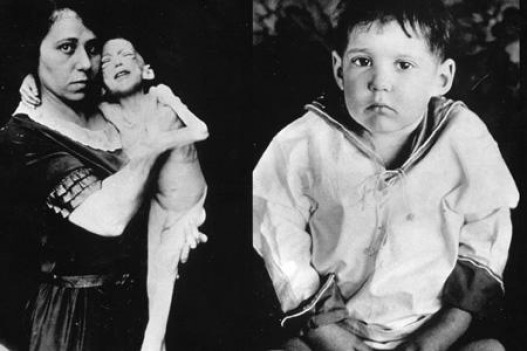
Justice of the Supreme Court, was diagnosed with type 1 diabetes, a death sentence. At the time of her diagnosis, children with T1D survived an average of 11 months after diagnosis. The only “treatment” was the Allen diet, a slow starvation—  eating about 400 calories a day from foods like “thrice boiled cabbage” (Total Dietary Regulation in the Treatment of Diabetes).

L: a child with diabetes on the starvation diet, R: same child after treatment with insulin (photo credit: trumanlibrary.org)

left: a child with diabetes on the starvation diet right: same child after treatment with insulin (photo credit: trumanlibrary.org)

Fortunately, Elizabeth was among the first American patients to receive insulin in 1922. She grew up, married, had three children, and died at age 73. When her children were young, she never told them she had diabetes, not even after her oldest son witnessed her convulsions from a severe episode of hypoglycemia. In fact, it wasn’t until her children were grown that she took each child aside and told them privately that she had diabetes.

Her secrecy made sense. She’d been handed a death sentence at eleven. Even after the discovery of insulin, prognosis wasn’t good. Recently, The New York Times ran an opinion piece, “The End Isn’t Near,” by Dan Fleshler, someone who has been living with diabetes for 53 years. Fleshler was diagnosed at seven, and his doctors weren’t optimistic about his longevity, but he’s healthy and here, yet the looming predictions cut into the quality of his life.

A diagnosis of a disease or a condition creates a stigma, and there’s a deep drive to keep any stigma a secret. However, secrets around disease create misunderstanding, shame, and fear. If people with diabetes and their family members don’t talk about what it’s really like to live with diabetes, then it’s easy for misconceptions such as: “insulin is a cure” or diabetes is “easy” as long as the patient doesn’t eat sugar, to circulate.

It wasn’t until my mid-twenties that I met who someone who was open about T1D. Amy regularly checked her blood sugar and bloused for food without any fanfare and answered all our questions, but I had no idea what it meant to have diabetes. In fact, we were hosting a party, and I made tea sweetened with honey just for Amy, because I knew honey was lower on the glycemic index. I’d thought to measure the honey and let her know how much I used, but I had no idea why it would have been better for Amy to drink something with an artificial sweetener in it, which she did.

A few years later, our son was diagnosed with type 1 diabetes, and I knew we would educate ourselves to help Henry live his life in the best ways we could. However, I thought we’d hunker down and live life with diabetes with relative quietness. And we did for a while, but we started noticing things, like when Henry hears the case of his blood glucose meter being unzipped, he holds out his finger without looking up from his Legos or iPad. We started reading information such as, Type 1 diabetes is increasing by 3% annually and affecting a younger and younger population, with some diagnoses occurring before a first birthday. There’s no disease registry, so T1D can’t be studied in a truly systematic way. Some insurance companies deny coverage for life saving and extending equipment, such as pumps and CGMs, for infants and children. Some schools don’t allow students with T1D to use smart devices, such as an iPod, iPhone, or iPad to help manage blood sugars.

It took me about a year to move from being a parent of a person with diabetes to an advocate for diabetes awareness and research. In fact, I think many parents of children with disabilities, diagnoses, and conditions, to their surprise, define themselves as  an advocate after the emergency settles into the daily.

So, for now, we’re speaking up, telling Henry’s story with the simple belief that story and science should work more closely together. This summer insulin turned 93 and Henry turned 5 in September. If we talk about diabetes enough, maybe one day we can talk about it less.

IMG_7239

#DOCtober & Advocacy

Kerri Sparling is one of the first diabetes bloggers. Her blog is Six Until Me. Shortly after our son was diagnosed, I discovered her blog and quickly appreciated its humor, honesty, and heart.

November is diabetes awareness month, and many diabetes bloggers and advocates plan special media campaigns to generate awareness and fundraising for research. But before we get to November, there’s October.

Kerri has created #DOCtober, where the idea is to take a picture everyday and, “to see if I can find something diabetes-related to photograph for the month.  If I can, awesome.  If I can’t, that inability shows how diabetes can’t and shouldn’t always be front-and-center” (Sparling, “Photo Challenge: #DOCtober”).

So in the spirit of advocacy and awareness, here’s Semisweet’s first #DOCtober.

View this post on Instagram

Dinner of 52 #carbs by a mum & pumpkin #DOCtober #t1d

A post shared by Semisweet (@semisweett1d) on

Semisweet will participate in #DOCtober on its Facebook and Instagram page. Join us there as we document each day in October, some where diabetes is in the frame, and some where it isn’t.

To Celebrate

To mark milestones in our family, we usually cook a nice meal and invite friends and family to celebrate with us. Of course there’s a cake, some ice cream, and  a few streamers left over from the previous event, like a baby shower we hosted seven years ago. Instead of planning an elaborately themed party, we enjoy good food and conversation to celebrate birthdays or anniversaries.

Our son, who has type 1 diabetes, turned five this September. He was diagnosed with type 1 at three-years-old, so he’ll probably never remember a life or birthday without this disease. We were planning a party per usual, and I don’t know exactly where the plot shifted, but it did. Henry’s only requests were Toad Cupcakes (à la Mario Kart) and a few Lego sets, but a little planning and a few Pinterest visits later, his 5th birthday was under the big top.

I made this. This is not a Pinterest Fail.

I made this. This is not a Pinterest fail.

We went BIG. I don’t want to say the circus celebration was diabetes related, but I have to admit, our whole family is seeing life and milestones through the lens of diabetes. Sometimes, the future I imagine for my son is grief-worn and full of woe. Other times it’s more kick-ass and victorious. The truth is probably somewhere in the middle with weekly visits to both extremes.

So, this year we erected a massive play structure that was given as birthday present by grandparents:

IMG_7006

We rented a bouncy house:

IMG_7682

We invited the neighborhood kids over to a drive-in move later that night:

IMG_6992

The truth of it is that this year has been hard. Every two days Henry anticipates a painful site change for his pump, which is an improvement over an injection of insulin every time he wants to eat. He waits to eat his food while his blood is checked and other people are already eating. Some nights he drinks juice in his sleep to combat lows. The truth of it is that future years will be hard too, and Henry will grow up before his time, because type 1 diabetes demands attention, focus, and discipline; characteristics not every adult posses.

I don’t believe that disease makes my child an angel or a hero. I realize this statement offends many people. I understand how this statement offends people. However, living with a chronic disease has taught me that the distinction between hero, and sick, and victim aren’t very useful. In fact, the distinctions between most things aren’t very useful. Having type 1 diabetes has made my son’s life more complicated and this makes him one tough kid, because a diagnosis of type 1 doesn’t allow for other options.

I’m cautious to say that living with a chronic disease is instructive. If I could flip  a penny into a magical fountain and wish this away, I’d trade every realization I’ve had about living with a chronic condition before that penny made one full rotation.

However, living with a chronic disease has shown me it’s worthwhile to look for what to celebrate. Sometimes it’s a birthday. Sometimes it’s a blood sugar that’s in range. Sometimes it’s the fact that I don’t cry when my son asks me a really difficult question, like why he has diabetes.

Around our house, most of the recent celebrations are pretty simple: like not being late despite everything we have to do to leave the house, guesstimating the carbs in a restaurant meal of beef tacos with a side of rice and beans, finding just the right spot to start a site, and really, really, really meaning it when we sing “Happy Birthday.”

https://www.youtube.com/watch?v=3pg0qpl6L2g