Have Diabetes, Will Travel: A Summer in Review

5,249 miles

34 days

18 states

1 oil change

16 site changes

4 Dexcom changes

2 vials of insulin

2 Dexcom Receivers

When Henry was first diagnosed with type 1 diabetes, I was afraid to put him in the carseat and drive to the grocery store. What if he was unconscious from a low blood sugar, but I thought he was just asleep?  What if he needed rescue carbs and I couldn’t get them quickly enough?  How was I supposed to drive and watch for symptoms in the rear view mirror? In hindsight, those fears seem silly, but those fears are valid concerns. Slowly, we got back on the road and increased our travels.

Our families live over 850 miles away, so the first winter vacation after diagnosis, we faced the acid test of really traveling with diabetes. We learned a 10% increase in basal would not even touch a high blood sugar caused by sitting in the car for hours on end. We watched the effects of fast food on the Dexcom receiver, as it read HIGH for many hours while we threw insulin at a stubborn blood glucose of 400. We’ve created innovative rest stops, and the less said about this, the better. 

Traveling with children is never easy, and traveling with a child who has diabetes is even not easier. To begin with, there’s the sheer mountainous amount of additional luggage that holds supplies and back up diabetes supplies. You have to calculate for site changes or multiple daily injections (MDI’s) and plan for back-ups if those fail. Insulin should be kept cool, plan for meals on the road (not fast food), and then there’s the absurdly high blood sugars caused by sitting in the car for long periods of time.

Henry can’t do three things because he was diagnosed with diabetes: serve in the military, become a commercial pilot, or a commercial truck driver. I’m OK with this list, but he can do everything else. He can do everything else; it just requires extra planning. Taking grand, long summer vacations is a rehearsal for the other challenges he’ll face while living with diabetes.

We crank his basal up 60% and hit the road, because the effort and payoff is pretty sweet.

meeting Mickey and Minnie at Friends for Life 2015

meeting Mickey and Minnie at Friends for Life 2015

time on the family farm

time on the family farm in the southeast

walking in the Atlantic in Maine

walking in the Atlantic at Maine

Caregiver Cheat Sheet

Last summer I sat on the floor outside the room while Henry was in art camp. He’d been diagnosed with T1D five months prior, and he’d been on the pump for the last two months. The camp was only one week long, so surly I could just sit on the floor and meet him for snack time and watch the Dexcom (this was pre Share), right? I sat on the floor and Henry loved art camp. However, I had ample time to contemplate the fact that until Henry is old enough for self-management, we can no longer drop Henry off at school, camp, a friend’s house, a birthday party, or even leave him with a family member, without talking about diabetes care.

When you tell someone about diabetes care, I’ve noticed three general reactions.

  1. A glazed over look appears in the eyes, then mouth, and invades the general posture of the listener. Do not leave your child with this person.
  2. The listener sort of gets it, and starts asking questions like, “You have to do that every two hours?” “You mean he can have sugar?” “So the pump doesn’t automatically know how much insulin to give him?” Leave your child with this person only after feedback loop systems are the standard of care or after you’ve had several more conversations about diabetes.
  3. Shaky hands accept the medical devices and instructions. Usually this person says something like, “I will call and text you.” Two minutes after you’re in the car, there’s a call, but you know this person can handle it.

Obviously it’s never a good idea to leave a child with diabetes with a caregiver who does not understand the basics of diabetes or is unwilling or too nervous to administer care. However, it is possible to train willing family and friends. To help our willing family members, babysitters, and preschool staff, we created a caregiver cheat sheet. The sheet covers: blood glucose range, hypo & hyper treatments, carbs for meals, Animas pump information, and Dexcom CGM information.

caregiver cheat sheet

Here’s the link to the document you can download and edit to specific person with diabetes and product information.

Link to Caregiver Cheat Sheet

Connor’s Diagnosis Story

Diagnosis stories are powerful teaching tools that help people learn to recognize the symptoms of type 1 diabetes. For the person diagnosed with type 1 diabetes, a diagnosis is the day his or her life changes and goes forward. Semisweet is sharing Connor’s Diagnosis Story in his own words.

Connor, diagnosed at age 15, October 30, 2009

I walked up to my math teacher’s desk, and asked for a hall pass. He looked at me with furrowed brows, “Connor, we’re only ten minutes into class. You should have gone before the bell rang.”

Something was going on with me. In my family I’d always been known as the one with the iron bladder, the champion of long car rides and movie viewings. But recently, I had to go to the restroom every half hour. Liquids rushed through me, and no matter how much I drank I was still thirsty.

When I returned to the classroom and gave the pass back to my math teacher, he studied my face and then the rest of my body. “Are you feeling alright?” he asked me, his tone more accusatory than concerned.

Later that day, I met my dad in the school lobby to sign out for a doctor appointment my mom had scheduled to address these strange symptoms.

“Are you okay?” my dad asked, as he pulled me into the corner of the lobby.

Over the past two weeks, teachers, students, and family members asked me that question over and over again. A couple of weeks ago, I’d had the flu and dropped a considerable amount of weight. My performance in cross-country meets had also descended into a valley of disappointing rates and unfinished races, but I figured I was still recovering.

I usually brushed off this repeated question, but when I met my father’s gaze, I knew there was something else. Sighing heavily, my father ran a hand through his hair. “Connor, I’m just concerned. Your math teacher contacted me earlier today and told me he’s concerned that you’re bulimic.”

“Excuse me?” I demanded in a whisper, my voice raspy from a dry throat. “Dad, you see how I eat. There’s no freakin’ way I’m bulimic. How could you believe something like that?”

“Connor, I’m not saying I agree with him, but you have been going to the restroom a lot after meals and you’ve lost so much weight that… well, it comes to mind.”

My family doctor was known for being a jokester amongst my siblings and myself. Generally, visits to the clinic involved thirty minutes of minimal tests being done while he rambled on about the crazy experiences of his own kids, or dropped as many bad puns as humanely possible. So when he stepped into the room, white lab coat swaying as silent as his wordless mouth, I knew there was something deeply wrong.

“Connor, we need to get you to the University of Iowa Children’s Hospital immediately,” he said sternly as he flipped through his clipboard until he found the form that he was searching for. He explained to me that my blood sugar was close to 500 over the normal level, sitting dangerously at 610. This also meant that my body had entered a state called ketoacidosis, a condition where my body was trying to urinate out toxins, which explained my constant thirst.

I stopped hearing anything that he said after the words “near coma” were uttered, and even my mother’s tight grip on my hand as she rushed us down the highway towards Iowa City couldn’t stop them from circling in my head.

With my mother beside me in the emergency room, a nurse explained that I’d lost so much weight because my body could no longer break down carbohydrates. Due to my inability to digest food properly, my body was now attacking the little amount of fat I carried. Before the appointment, I’d merely seen myself as a scrawny fifteen year old who’d lost a couple pounds, not 25 pounds in 2 weeks.

The medical staff told me that with the right training and equipment, I could battle Type 1 Diabetes, that with time I would get used to lancets and needles and blood drops and damaged nerves in my fingertips. There was one crucial piece of knowledge that was implied: T1D cannot be defeated, only subdued.

On my second night in the Pediatric Unit, I was jolted awake as a sharp object stabbed into my pinky finger. I looked over to see a nurse in blue gloves testing my blood sugar. “Sorry, I didn’t mean to wake you,” she said.

“It’s fine,” I replied groggily, and motioned towards the tester in her hand. She brought the meter over so I could see it. The screen flashed: 248.

I gave her my best smile, but I averted my gaze, not wanting her to see my fear. With all the talk of comas, needles, diets, and other health complications like loss of sensation in limbs, and (very rarely) blindness, my morale was still low.

“You play Kingdom Hearts?” she asked me, holding the Nintendo DS case that’d been sitting on my nightstand: the newest game in the series, Kingdom Hearts 358/2 Days. I’d played it five hours that day, sitting in my bed while my parents conversed with doctors about insurance and insulin.

She laughed, “I love these games. You know what? You’re kind of like a video game character now.”

I sat up and pulled my legs to my chest, resting my chin on my knees. “How?”

“Well, you have to regulate your blood sugar, right? And what you eat and drink, and how much you exercise, and when to take shots. Stuff like that.” She held up the blood glucose meter, pointing towards the digital numbers. “This is your life bar. And if your health gets too low, you need to drink a potion to get yourself back at the top of your game. But when it’s too high, you’ve got a status ailment, so you need to take your insulin, which is an antidote. And your lancet is your weapon against not knowing what your levels are.” She winked at me. “You’re going to be fine. You should get back to sleep, you’ve got your four hour class on diets and insulin dosages tomorrow.”

I realized then that many health professionals were here trying to make their patients’ lives easier or, at least, bearable. She didn’t need to make that analogy for me, or even talk to me when I’d woken up. But she did, and that made all the difference.

Connor today as a college student

Connor today as a college student

Diabetes’ First Day of Preschool

Starting preschool can be scary, but starting preschool with diabetes is wake-up-at- 2:00a.m. in-a-sweaty-the-apocalypse-is-nigh-dead-panic-scary. Preschools vary, but the keys to the best possible experience of diabetes at preschool are education and communication. This means education of the staff, the children, and the parents of the children.

Obviously, education of the staff must be the most thorough and detailed. When our son was diagnosed he was in an in home daycare, and my husband and I split time with him at daycare  for his first week back, and then came during nap time to teach the staff how to draw insulin in a syringe, then use a pen, and then use a pump. We transitioned through all these in a quick three months. When our son started at a preschool on campus where we work, we coordinated with the director to train the student workers and staff as part of their training hours. We brought Henry’s dinner with us and demonstrated counting carbs, checking blood sugar, and then bolusing for the carbs he ate right in the training meeting. Picnics make all meetings better.

We brought Rufus, the JDRF bear to preschool, and we purchased copies of the Pink Panther Understanding Diabetes books for the teachers and classroom. Lastly, we wrote a letter to be sent home with the parents. Luckily, the school Henry’s attends does not celebrate birthdays with food, but I was very touched when a few weeks after school started we attended a birthday party  for one of his friends from school and discovered a plate of cheese, a bowl of goldfish, and a low sugar cupcake just for Henry.

superhero with diabetes at super preschool

superhero with diabetes at super preschool

Here’s a version of the letter we’re sending home this year. If this letter works for you, adapt it and take it to your preschool.


Dear _____________________,

On March 6, 2014 our 3 ½ year old son, Henry, was diagnosed with type 1 diabetes. Type 1 diabetes is an autoimmune disease. Nothing Henry ate or did gave him this disease, and type 1 diabetes in not contagious. Type 1 diabetes is an autoimmune disease. For the rest of his life Henry will take insulin injections, monitor what he eats, and test his blood glucose with finger pokes.

Because your child/ren are at pre-school with Henry, they might see Henry get his blood sugar checked, receive insulin, or hear talk of carbs. Henry wears an insulin pump, usually around his waist, and other children are often curious about his “phone” or “iPad,” which is really his pump.

As Henry’s parents, we’d like to take a moment to share with you how our life, particularly Henry’s, has changed. We have to count all the carbs Henry eats and give him insulin to cover the carbs. Basically Henry’s blood sugar is measured, he is then given insulin remotely through a pump and meter-remote, then he eats. His blood sugar is checked two hours post meal. We repeat this every time he eats. Henry wears a pump 24 hours a day that delivers insulin through a needle that is subcutaneous. He also wears another device (continuous glucose monitor (CGM)) on his back or abdomen that measures and transmits an estimate of his blood glucose.

He can do everything any other kid can do, but it just takes extra planning and monitoring. For example, what can’t happen without planning is for Henry to be given a cupcake at a birthday party without insulin. He can still eat cake and cupcakes at birthday parties, but it requires planning and extra carb counting. We always have to know how many carbs he eats and when because he needs insulin for this.

We want Henry to participate in every opportunity, and we want him to feel included, but because of type 1 diabetes, this means we have to plan more carefully. We don’t expect any family to change how they choose to celebrate his or her child’s birthday at preschool. Our purpose of this letter is to inform you. Deli frosted cupcakes make tight management of blood glucose difficult. Angel food cakes, some cheesecakes, and pound cakes tend to have lower carbs than other cakes. Reduced sugar yogurts and popsicles are also good treat alternatives. “Free foods” are foods without carbs like sugar free Jell-O or cheese sticks.

Vomiting from tummy bugs and fevers from colds are particularly troublesome because the stress of the illness raises blood sugars and produces ketones in people with diabetes. What is a regular cold for a kid without diabetes means careful monitoring and potential hospitalization for a child with diabetes. Last year, Henry was in the hospital twice as he battled a tummy bug with type 1 diabetes.

While Matt and I wish this road were different for him, it isn’t, and our job is now to normalize a life with diabetes for Henry, and to be his advocate. We’re sharing his diagnosis with you because he is so young we are the ones managing his care; we feel the more people in our community who know, it increases the possibility of better management. Of course, we’re open to questions you have as we learn together how to keep Henry healthy. A good website is http://www.diabetes.org and http://www.jdrf.org. He’s a healthy four-year-old, who also happens to have diabetes.

With Love,

(shared email and cell phone)

Melia’s Diagnosis Story

Diagnosis stories are powerful teaching tools that help people learn to recognize the symptoms of Type 1 Diabetes. For the person diagnosed with Type 1 Diabetes, a diagnosis is the day his or her life changes and goes forward. Semisweet is sharing Melia’s Diagnosis Story in her own words.

Melia, diagnosed at Age 9, February 15, 2003

Usually when I am asked how I was diagnosed with type 1 diabetes, I tell the short and sweet version, “My brother had the flu then I got the flu. He got better and I didn’t.” This is followed by the onslaught of how I got diabetes. “Did you have a bad diet? Were you overweight? Is that the good or bad kind? Does your family have a history of diabetes?”

No, no, there is no good kind, and still no. In fact, when I was diagnosed T1D was not really considered genetic yet. Today, research suggests otherwise. The best way to describe it is to say that there is something in my genes that was waiting to be triggered. I just happened to get the right bug at the right time, which made my immune system turn on itself and attack my pancreas. If I hadn’t gotten sick those genes may have never been triggered, or it could have just been prolonged. So, to make the short, sweet story not so sweet here is the long version:

Melia one week before diagnosis

Melia one week before diagnosis

On Valentine’s Day I lay my head on my desk as my classmates dug into their candy bags and Valentine’s cards. After school my parents packed my brother and me in the car and we left for my grandfather’s birthday celebration in Chicago. The drive took an extra 2 hours, because I had to use the restroom so often. We sat in a fancy restaurant for a late dinner. I made my first trip to the restroom before the drinks arrived. We ordered our food, I drank all my water as fast as I could and left for my second trip to the restroom. A few minutes later I went back for the third time. This time I felt nauseous. My parents wondered what was happening to me, but I insisted I was fine. We had only just begun eating when I was sick at the table. The next part I remember is my mother putting me in the bathtub at my grandparent’s house where she noticed I’d lost an unbelievable amount of weight. Immediately, I was taken to the E.R. One look at me and the doctors knew what was wrong; they didn’t hesitate to admit me. I was diagnosed with Type 1 Diabetes on February 15, 2003. My A1c was 15 and my blood sugar was 1024. The doctors were shocked that I was coherent because, as I would find out later, I should have been comatose. I was in 4th grade.

The next 5 days were spent in the Intensive Care Unit, working toward lowering my A1c. From there I was transferred to the hospital where I began learning how to check my blood sugar, take insulin, and count carbs. I gave myself my first injection. I started on NPH and learned the “clear to cloudy” rule of mixed insulin injections. I would start Humalog and Lantus when I went home. As I began learning the routine that would become my lifeline, everything from the previous few weeks also began making sense. I showed all the symptoms of Type 1 Diabetes: increased thirst and hunger, frequent urination, weight loss, lethargy. Even though my mom had taken me on several doctors’ visits my parents had continually been told it was merely a virus, a cold, the flu. My brother had gotten over his flu symptoms, but the antibiotics made no difference for me.

By the end of my week in the hospital, everyone could tell that I was feeling like myself again when I intentionally triggered the floor lock down with my hospital I.D. bracelet.

After that week I was released from the hospital and 3 days after that went home to Iowa. The first trip I made to the grocery store took all day. Tasked with finding low carb snacks, my parents and I read every last nutrition label in the store. Sugar free Jell-O, string cheese, gold fish, and celery. This would become the usual for me throughout all of school. I’ve eaten enough celery in my life to never want to look at a stalk again. Slowly, things returned to some kind of normalcy. I went back to school and I was getting healthy one day at a time. Every day is still a learning experience.

Of T1D, I will say this: There is an immense list of things I’ve been told I can’t do. I disagree with that list. I survived college. I know how to carry 6 months of insulin supplies on a plane. I’d like to get my scuba certification. My mother taught me that I was a kid first. So I have never let my diabetes stop me. I refuse to let it. I am not a diabetic. I have diabetes. It is my disease. I have diabetes, it does not have me.

What I Did or Didn’t Do Wrong

Five weeks after our son’s diagnosis of T1D, we were back in the Pediatric Specialty Unit at our first follow up visit with the endocrinologist. She closed the appointment by saying, “You guys are doing great. We don’t know what causes Type 1 Diabetes. It just happens that the right two people with certain genes found each other and fell in love.”

Type 1 Diabetes is an autoimmune disease, and after hearing that, it felt like we’d given our kid some bum genes. Like certain cancers, one of the latest theories on the etiology of Type 1 Diabetes is related to the gene-environment interaction, which is commonly described with this analogy: genes load the gun and environment pulls the trigger. If we’d loaded the gun, I wanted to find out if it was likely that we’d also pulled the trigger.

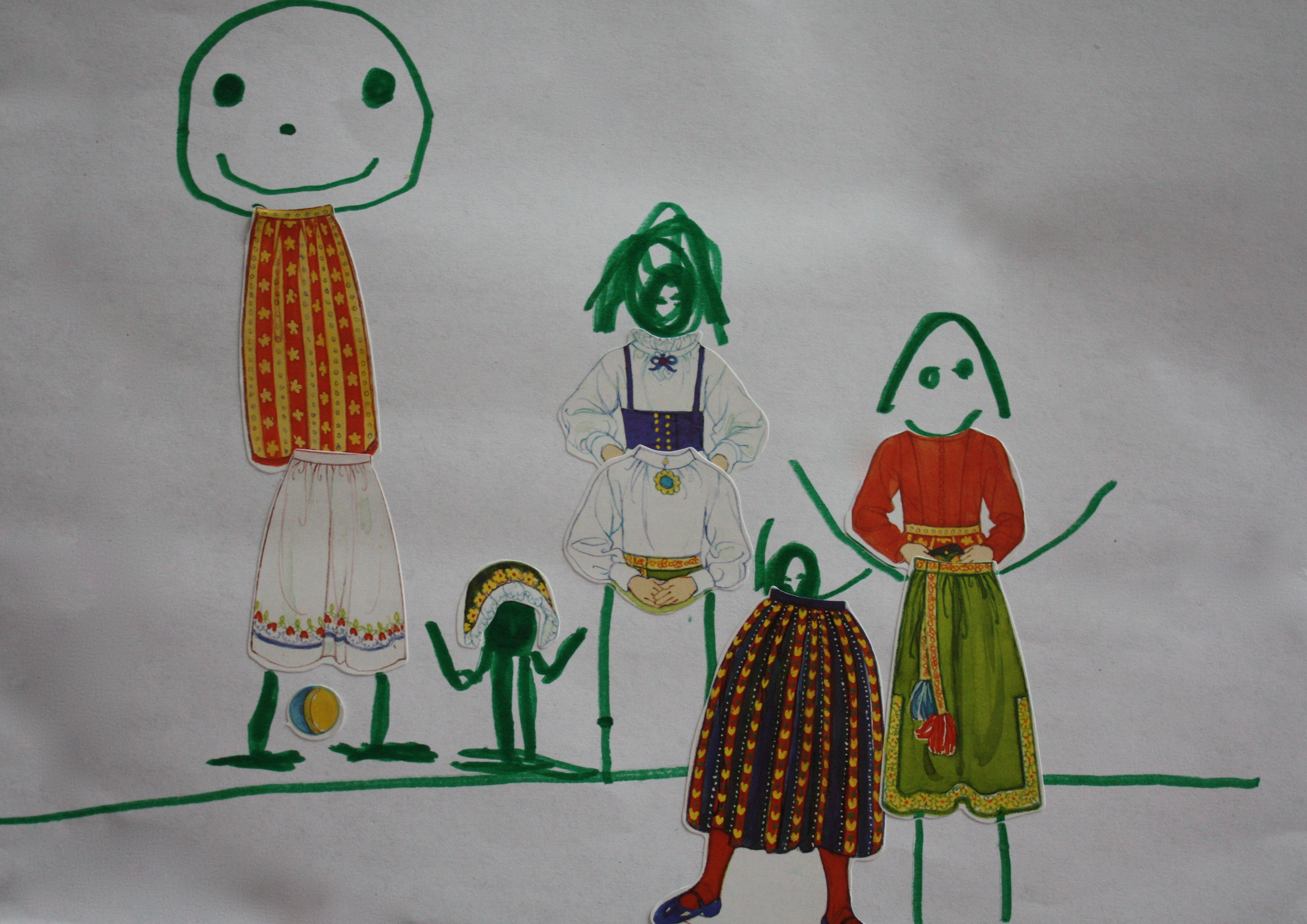
Family Portrait by Henry

Family Portrait by Henry

I spent a lot of time reading medical articles describing the hazy understanding of the etiology of Type 1. There are certain risk factors that make the disease more likely, but besides recently moving to a cold climate, Henry had none of these risk factors. In the general population, with no history of Type 1 in the family, the chance of developing Type 1 is 0.4%. On both sides of our family, Henry is the first person to have Type 1. We have the usual history of autoimmune diseases that are common in the developed world, like rheumatoid arthritis and Hashimoto’s, but no T1D until now. 0.4%

In my research, I did discover that Type 1 is increasing about 3% annually, which in the world of disease, is a quickly climbing rate. If I’m being honest with myself, I knew I wouldn’t find any answers in all the research, not even much peace.

There’s nothing any parent of a child with T1D does or doesn’t do. There are certain populations and places where Type 1 Diabetes is more likely, but until there is a disease registry, we won’t know the true occurrence of T1D. I still find it fascinating to read case studies and medical articles, like “Pathogenesis of type 1 Diabetes” by Massimo Pietropaolo, MD (subscription required to read full article), but sometimes a good meme nails it.

“I Got Scrapes, And This Is Not a Scrape”

This guy opened the first ever Diabetes In A Minute a series of mini documentaries about living with diabetes at Friends For Life 2015 in Orlando.

He’s got scrapes, but obviously diabetes isn’t one of them. For now. When this video was broadcast across four big screens, Henry left saying, “Everyone knows my name is Henry.” And it’s true, people came up to Henry and complimented his video, to which he replied, “Maybe next year you can make a video.”

He is young and he is innocence. In the video, Henry blithely tells the audience about his scrapes, and in the next breath he shows off his pump and continuous glucose monitor (CGM), as though these two were equal. One day the stigma and needed longanimity of “diabetes” will outweigh scrapes, and that is a natural rite of passage.

When a stranger asks me about the gear Henry is wearing or I explain to a colleague why I had to step out of meeting a few days prior, T1D comes up, and I briefly explain the basics. Usually, this scenario goes smoothly and hopefully someone understands more about T1D. However, sometimes this moment is teeth cringing, and an over-sharing stranger tells me about his or her dead grandmother in the produce aisle. When people respond after learning of my son’s diagnosis, I believe they are usually attempting to relate or don’t know what to say, but as a parent of a child with diabetes, the two most dreaded responses from someone who learns of my child’s disease are:

1. Oh, I’m so sorry. My grandma / great aunt / grandfather’s cousin died of diabetes. They were 48 / 52/ 57. At least I think it was Type 1, or maybe it was Type 2.

I usually say, “I’m sorry to hear that,” but I want to say, “I’m sorry to hear that. Once you figure out if it was Type 1 or Type 2, you  might want to read a little more about the amazing treatments available today for people with T1D. Oh and hey, have some common sense. Maybe don’t tell me about your dead relative while I’m grocery shopping with my four year old son who happens to have the same disease that killed your grandma / great aunt / grandfather’s cousin.

2. Well, at least it’s good he has it so young, so he won’t know the difference when he’s older. 

I usually say, “A lot of people say that,” but I want to say, “A lot of people say that because they are misinformed. I’m sure he’s noticed his older sister is not wearing a pump and getting blood sugar checks 10-12 times a day. He’s also noticed that the other twenty-three kids in his preschool class don’t check their blood sugar, wear pumps, or go on field trips with massive medical supplies in a backpack. Also, those 13 or so years, which he would of had if he were diagnosed later, with a normal, salubrious blood sugar that are conducive to his longevity, I don’t mourn those.”

I think Henry’s got some scrapes, but hopefully as people become more educated about T1D they won’t add a new scrape. The first step toward empathy is meeting someone with T1D, and the second step is learning what to say. It’s great to hear, “I’m sorry to hear that. Can you tell me more about Type 1?” or “I’m sorry to hear that. I’m not sure I really understand the difference between Type 1 and Type 2,” or even, “I’m sorry. I think I know someone else with that.” People with T1D need advocates to understand the difficulties and trials of living with T1D, so listen to their stories before you tell yours.